Underslung Overhead Crane

Under-running bridge crane that hangs from the runway beams — ideal for buildings with restricted ceiling clearance.
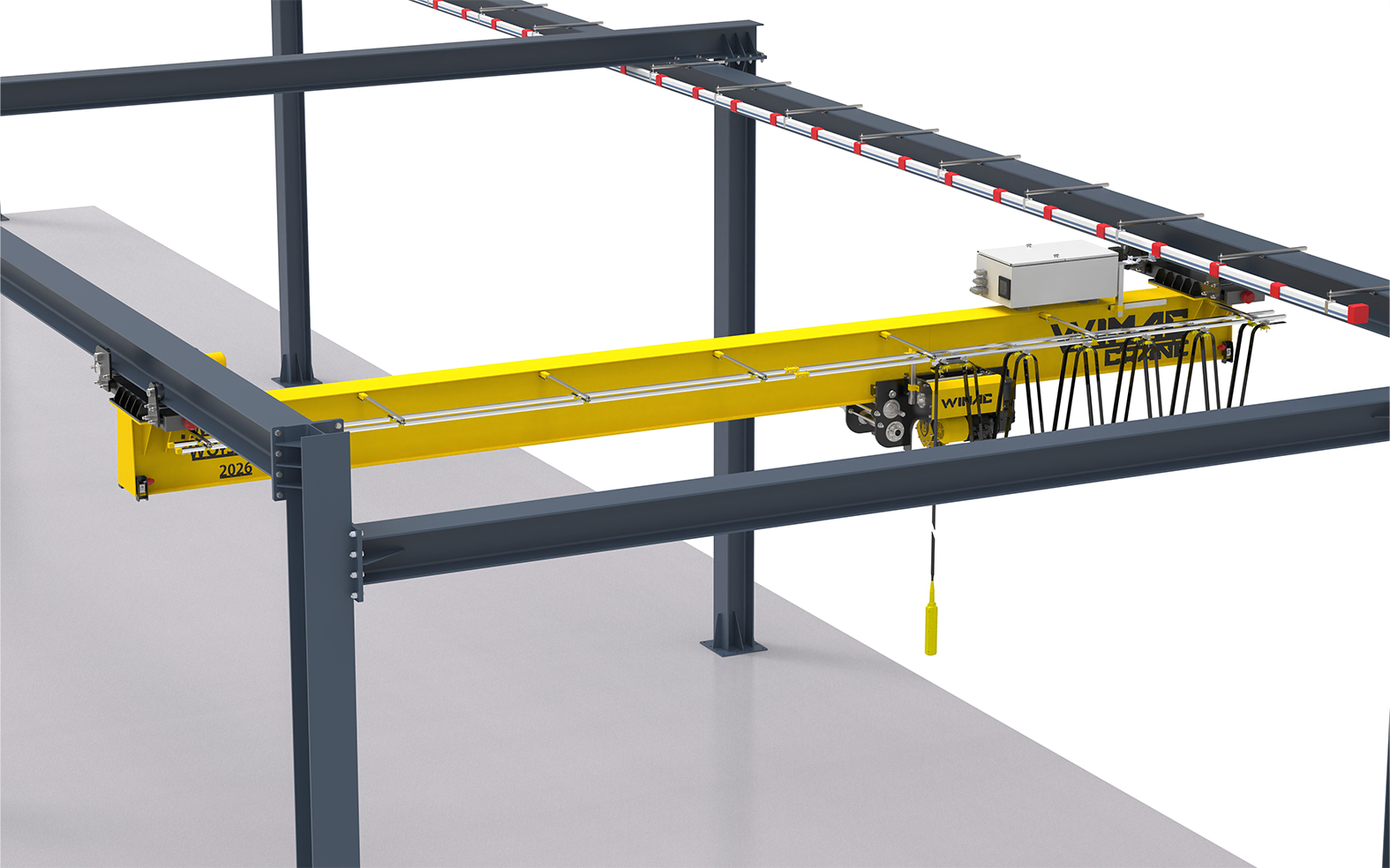
Explore Underslung Overhead Crane Components

Underslung (low-headroom) overhead crane — component map
01
Overview Underslung Overhead Cranes

What is an Underslung Overhead Crane?

Underslung travelling cranes are suspended from the building roof structure, with the crane end carriages running on the underside of the runway beams. This design eliminates the need for floor-based runway columns and is ideal for areas with limited floor space.

It allows for optimal coverage in smaller facilities, irregular building layouts, or when clear headroom is a priority, supporting light to medium loads with smooth and quiet travel.
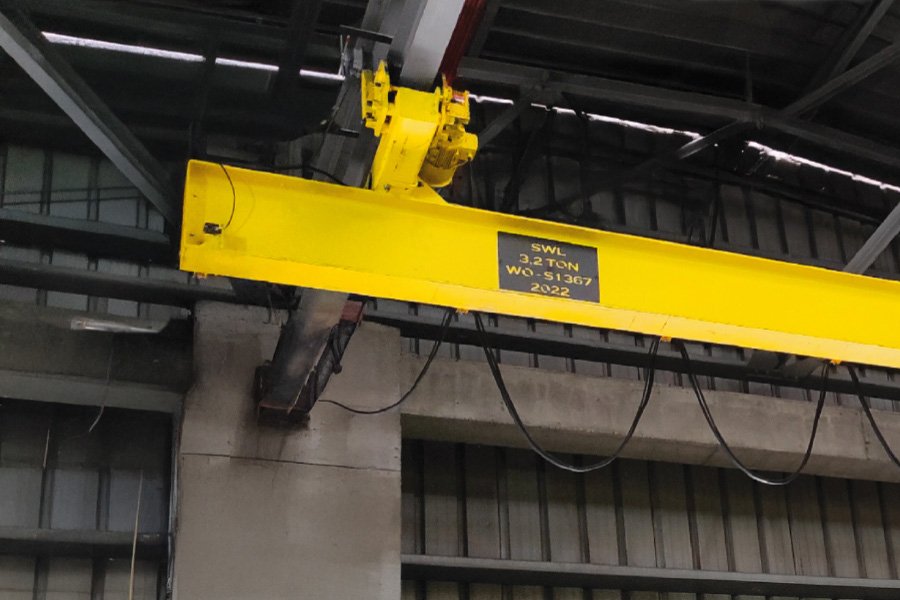
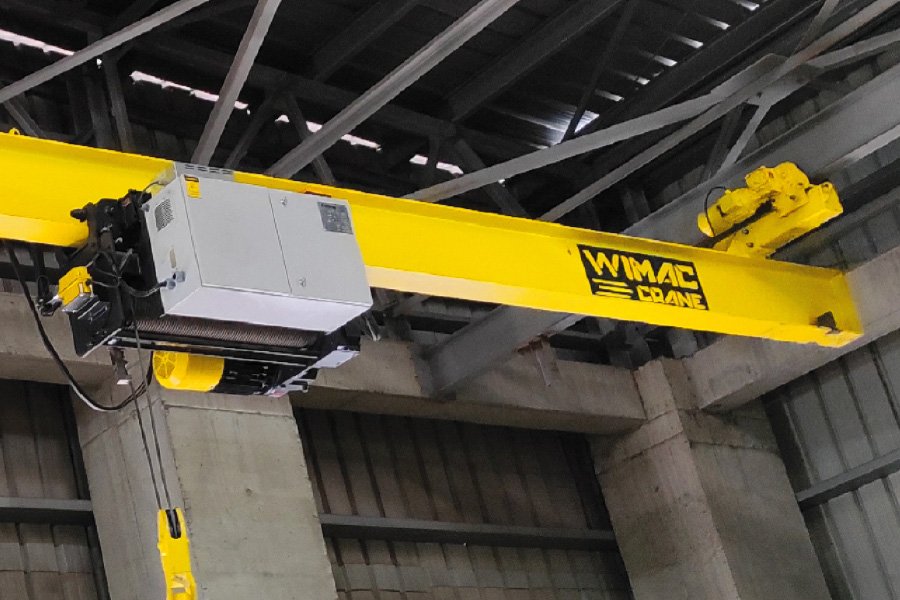
Wimac's Turkish-manufactured underslung overhead cranes are engineered to maximize usable floor area and clear hook height in buildings where ground-mounted runway columns are impractical. The under-running bridge structure hangs directly from the existing roof support beams, freeing up the workshop floor for production, storage and forklift movement.

Designed in compliance with FEM and ISO standards, Wimac underslung overhead cranes deliver dependable performance for light to medium duty applications — assembly lines, maintenance shops, warehouses and irregularly shaped industrial buildings.

VFD Controlled

Smooth acceleration and precise positioning with variable frequency drives on all motions.

FEM & ISO Compliant

Designed and manufactured according to international crane safety standards.

Overhead Crane Bridge Optimization to Building Design

Overhead crane main girder connection configurations according to building design and headroom level.
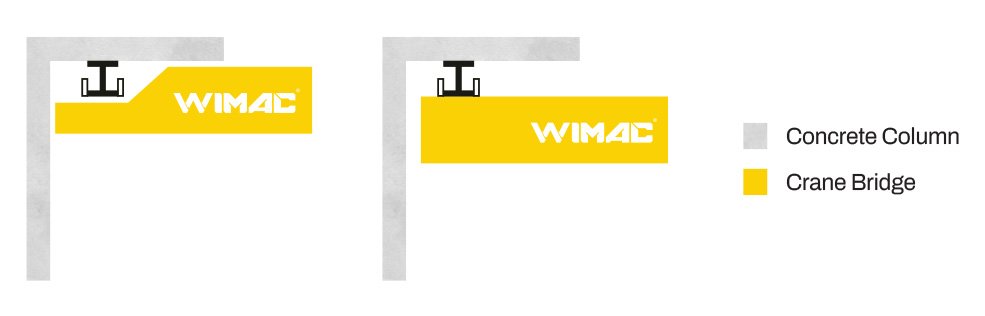
Wimac underslung overhead crane (under-running) — bridge optimized to the host building's structural design

Underslung Overhead Crane FAQ

Common questions about Wimac underslung (suspension) overhead cranes — structure, capacity, span and where they make sense.


What is an underslung overhead crane?
An underslung (also called suspension) overhead crane is a bridge crane whose end carriages run on the lower flange of the runway beams, with the entire bridge structure suspended from the building roof. This eliminates the need for floor-based runway columns and is ideal for facilities with limited floor space or restricted side clearance.
What is the difference between an underslung and a top-running overhead crane?
A top-running crane — e.g. the single girder or double girder overhead crane — runs on rails mounted on top of runway beams supported by columns or brackets. An underslung crane runs underneath the runway, so the bridge load is transferred to the roof structure rather than the floor. The trade-off is reduced capacity (typically ≤ 10 t) but full bay-width coverage and no floor obstruction.
When is an underslung crane the best choice?
Underslung cranes are the right choice when the application requires maximum floor space (no runway columns), full bay-width hook coverage close to the walls, limited vertical clearance, or where the existing roof structure can safely carry the suspended runway. They are particularly common in light-assembly lines, electronics, paper handling and clean-room facilities.
What is the maximum capacity of an underslung overhead crane?
Wimac underslung overhead cranes are produced in capacities from 250 kg up to 10 t. Higher capacities are possible on engineered projects but are limited by the load-bearing capacity of the host building's roof structure.
Can an underslung crane be retrofitted into an existing building?
Yes, in most cases — provided the host building's roof structure is verified to support the additional dead, dynamic and impact loads of the suspended runway. Wimac engineering can review site drawings and structural calculations to confirm feasibility before manufacturing.
What FEM / ISO duty class and span ranges are available?
Wimac underslung cranes are typically designed in the FEM 1Am to 2m / ISO M4 to M5 duty class range, with standard spans up to 20 m. Full FEM / ISO criteria are explained in our general information & selection guide.