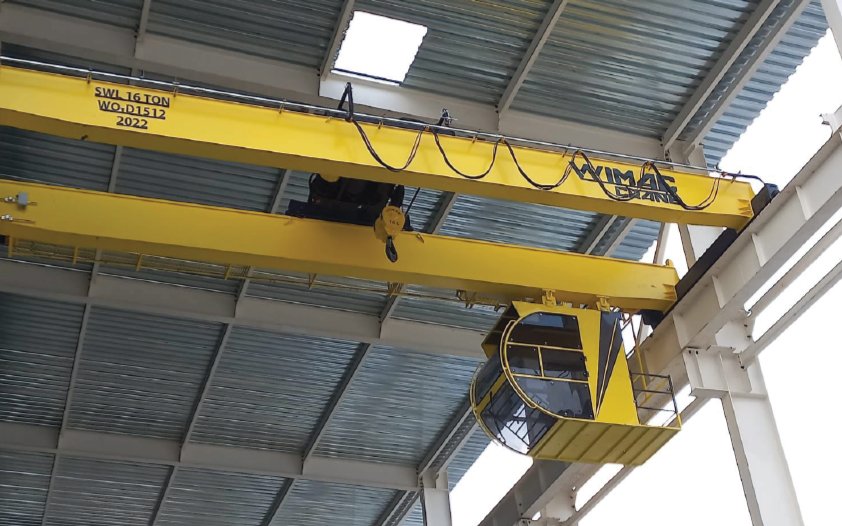
Double Girder Overhead Crane

Heavy-duty double girder bridge crane engineered for high-capacity industrial lifting and continuous-duty operation.
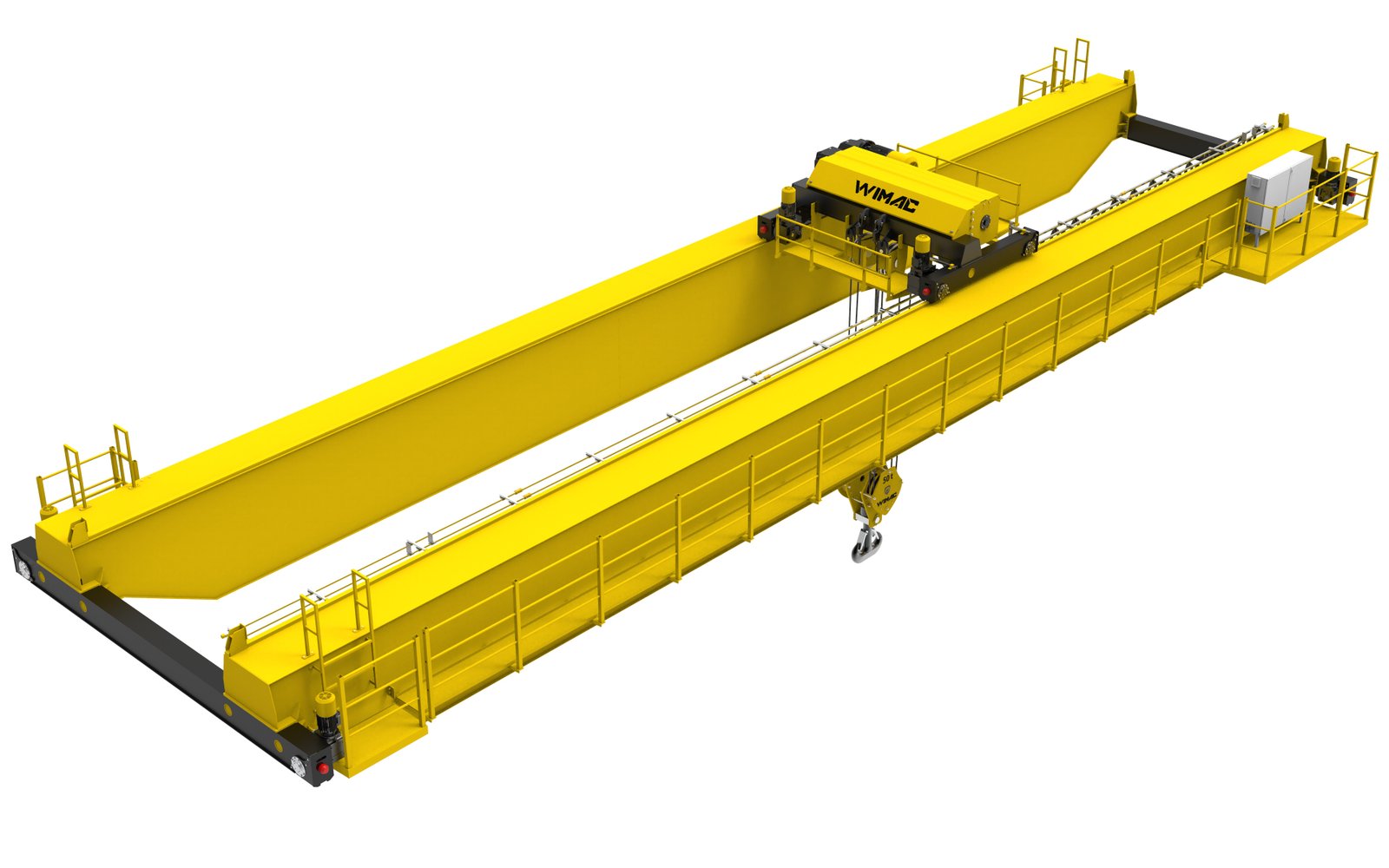
Explore Double Girder Overhead Crane Components

Double-girder overhead crane — component map
01
Overview Double Girder Overhead Cranes

What is a Double Girder Overhead Crane?

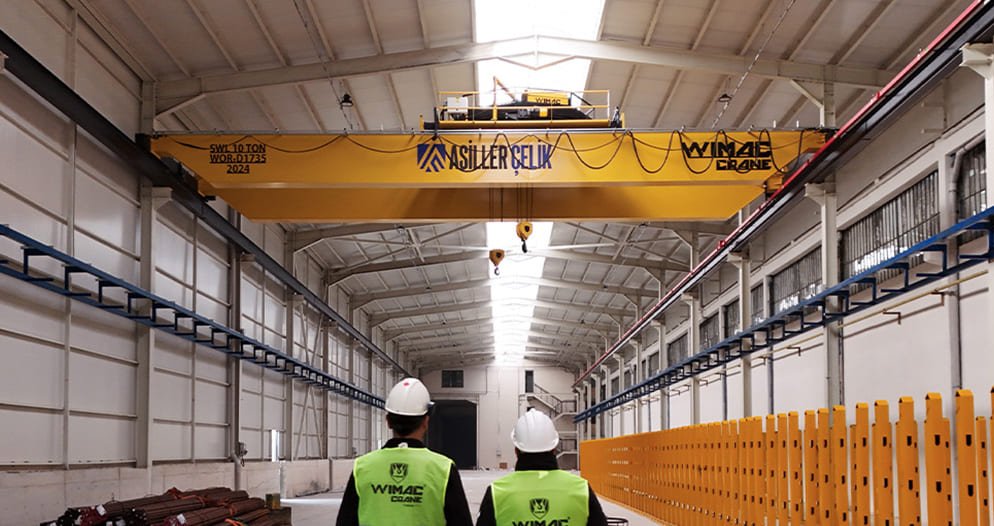
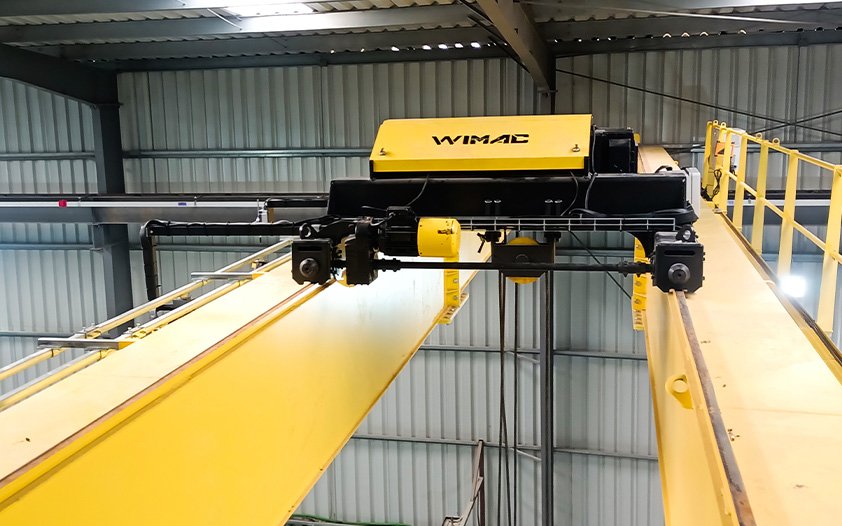
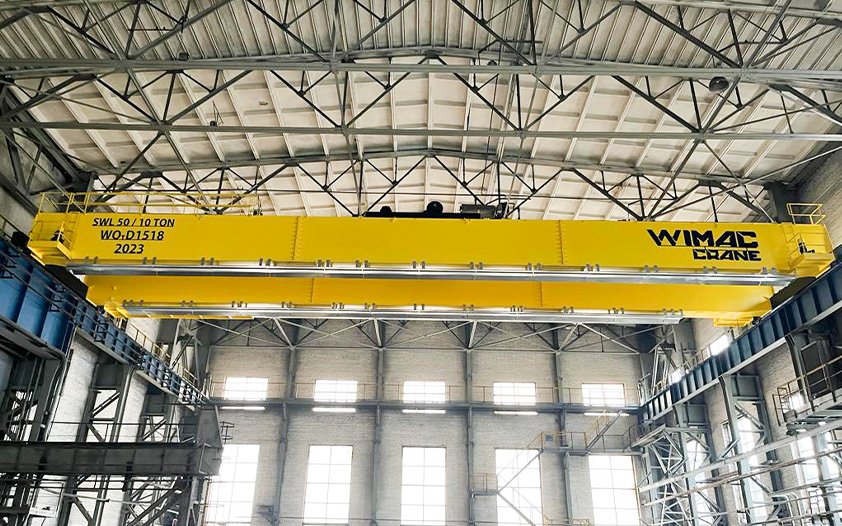
Double Girder Overhead Cranes are designed with two parallel bridge girders, allowing the hoist trolley to travel on rails mounted on top of the girders. This structural configuration enables higher lifting capacities, longer crane spans, and increased lifting heights compared to single girder systems.

Thanks to their rigid steel construction and enhanced stability, double girder overhead cranes provide precise load positioning, smooth operation, and an excellent hook approach. These characteristics make them ideal for heavy-duty material handling and continuous industrial operations.
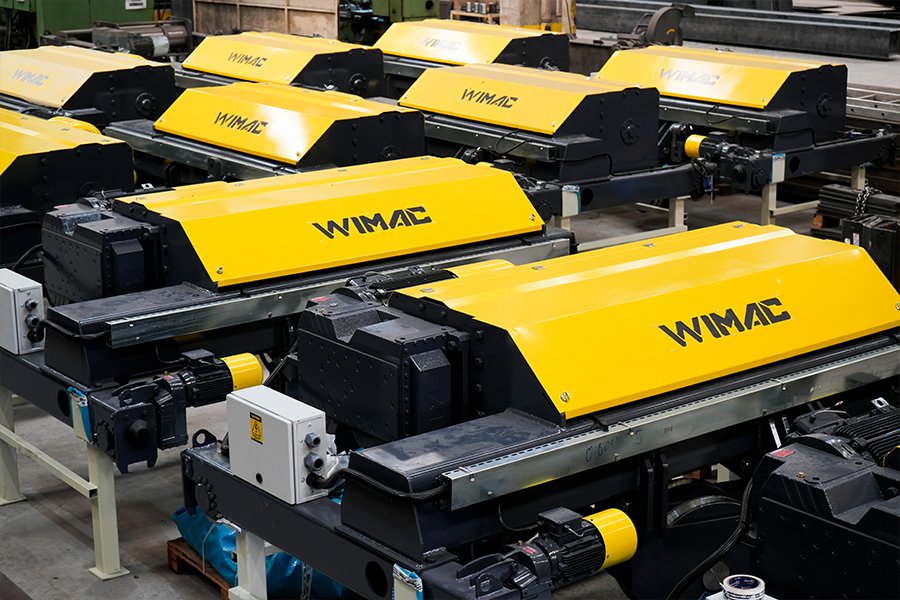
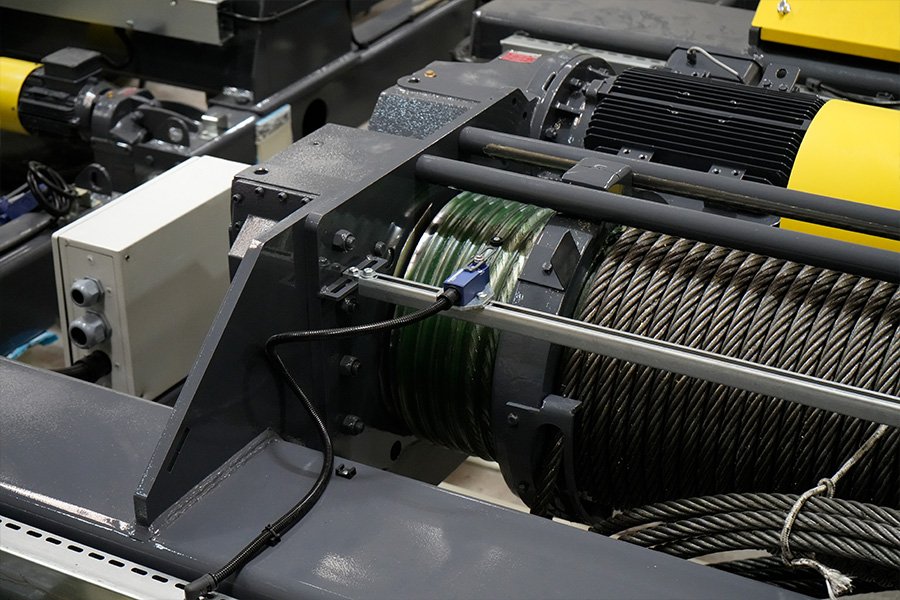
Wimac's Turkish-manufactured double girder overhead cranes are engineered for high-capacity lifting, long-span coverage, and demanding duty classes. The twin-girder bridge structure ensures minimal deflection, superior load distribution, and long service life even under intensive working conditions.

Designed in compliance with FEM and ISO standards, Wimac double girder overhead cranes offer maximum operational safety, high efficiency, and excellent return on investment.

VFD Controlled

Smooth acceleration and precise positioning with variable frequency drives on all motions.

FEM & ISO Compliant

Designed and manufactured according to international crane safety standards.

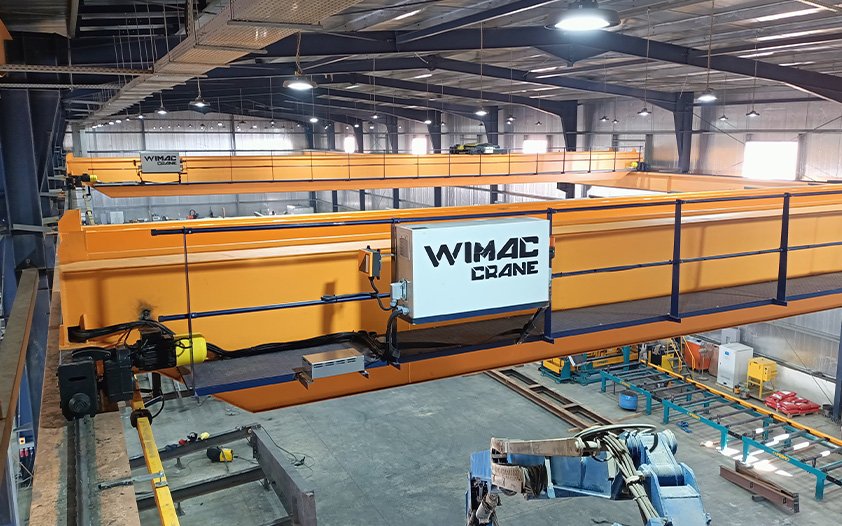
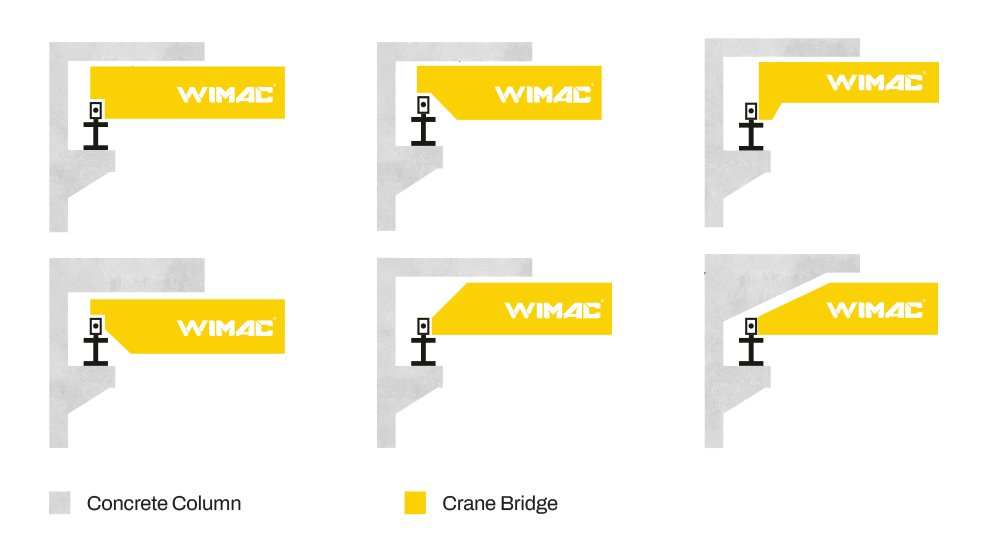
Overhead Crane Bridge Optimization to Building Design

Overhead crane main girder connection configurations according to building design and headroom level.
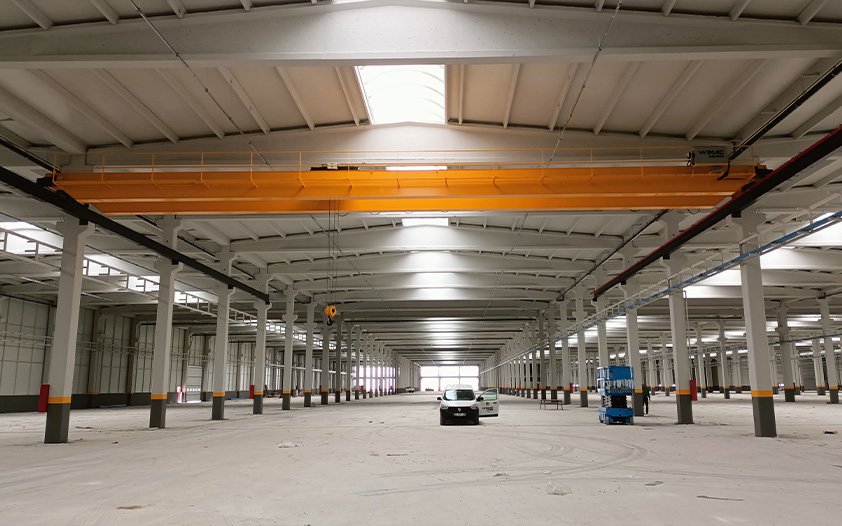
Wimac double-girder overhead crane bridge optimized to the host building's structural design

Double Girder Overhead Crane FAQ

Common questions about Wimac double girder overhead cranes — capacity, duty class, span ranges and typical applications.


What is a double girder overhead crane?
A double girder overhead crane is a heavy-duty EOT (Electric Overhead Travelling) bridge crane built with two parallel main girders. The hoist trolley runs on rails mounted on top of the girders, which delivers higher lifting capacity, greater hook height and longer spans than a single girder design. It is the preferred configuration for continuous heavy-duty industrial service.
What is the maximum lifting capacity of a Wimac double girder overhead crane?
Wimac double girder overhead cranes are engineered in a capacity range from 3.2 t up to 320 t. Above 80 t, double girder construction is essentially mandatory because of the bending and deflection loads on the bridge structure. Every crane is sized for the customer's specific span, duty group and lift height.
When should I choose a double girder over a single girder overhead crane?
Choose a double girder overhead crane when the application requires capacity above ~20 t, span above ~25 m, maximum hook height (top-running trolley clears more vertical space), a higher FEM duty class (M5 / M6 / M7), or service add-ons like walkways, cabin operation, magnet/grab attachments or auxiliary hoists. For lighter, lower-cycle operations the single girder overhead crane is more economical.
What FEM / ISO duty classes do Wimac double girder cranes meet?
Wimac double girder overhead cranes are designed and verified in the FEM 2m to 4m / ISO M5 to M8 duty class range covering medium-, heavy- and very heavy-duty continuous-service applications. Full technical reference is in our general information & FEM / ISO selection guide.
What span and lifting height ranges are available?
Standard Wimac double girder cranes cover 6 m to 100 m span and 4 m to 24 m lifting height, with lifting speeds from 1 to 12 m/min depending on hoist configuration. Long-travel and cross-travel speeds are VFD-controlled for precise positioning.
Where are double girder overhead cranes typically used?
Typical applications include steel production, foundries, paper mills, automotive manufacturing, power generation, heavy machinery assembly, concrete & precast plants, and any facility requiring continuous heavy-duty material handling. Hazardous-area variants are available as ATEX / IECEx explosion-proof double girder cranes.