Semi-Gantry Cranes

Semi-gantry cranes — one leg on the floor, the opposite end running on a wall-mounted rail. Frees floor space without sacrificing reach.
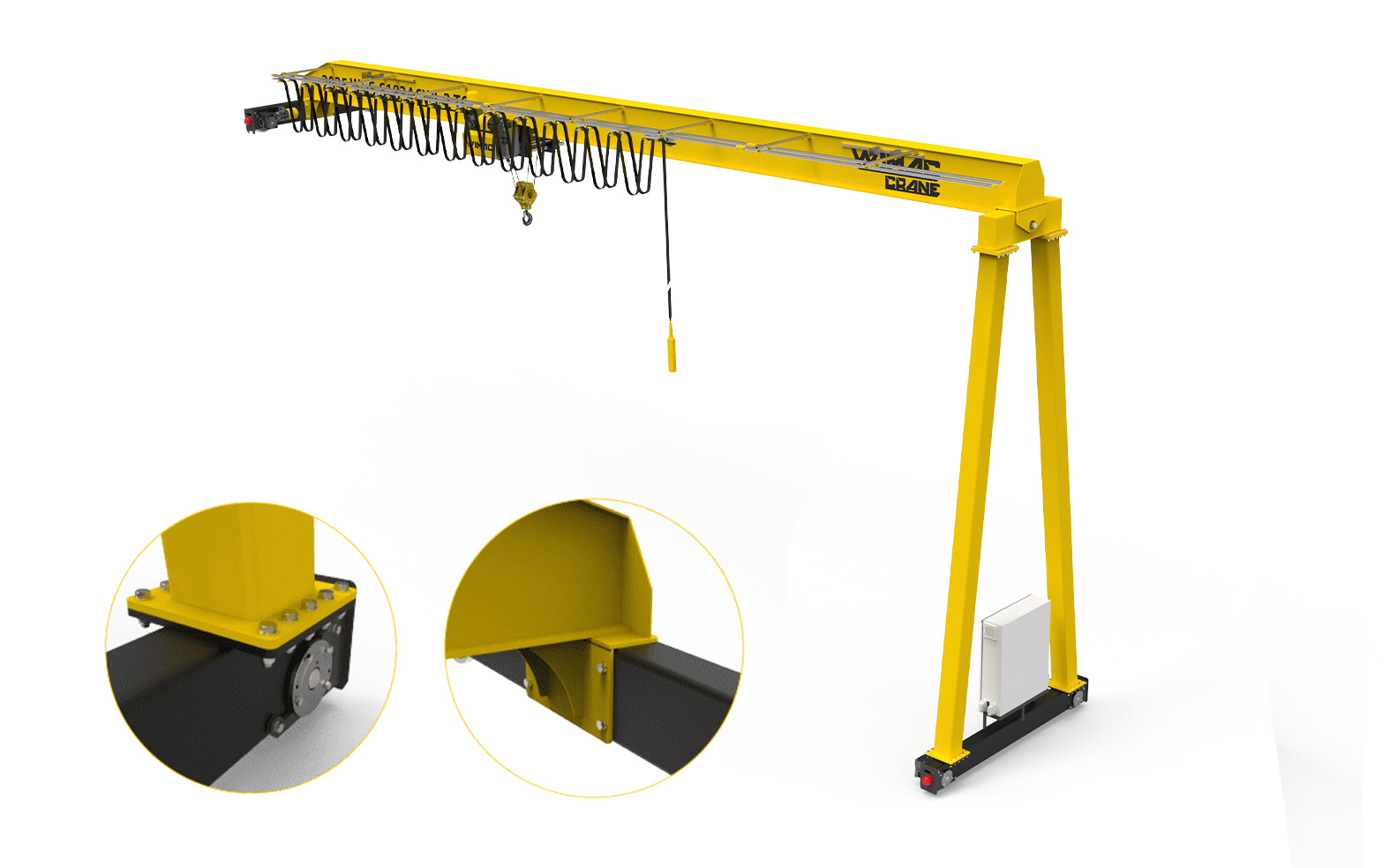
Explore Semi-Gantry Crane Components

Semi-gantry crane — component map
01
Overview Semi-Gantry Crane

What is a Semi-Gantry Crane?

Semi-Gantry Cranes are designed for facilities that require efficient material handling while maximizing floor space and adapting to existing building structures. With one side running on a ground rail and the other supported by an elevated runway beam, they offer a cost-effective solution for production halls, warehouse zones, and areas where a full gantry crane cannot be installed.

This hybrid structure provides smooth side access, flexible layout integration, and reduced installation time. Semi-gantry cranes deliver precise, stable, and low-maintenance performance, making them an excellent choice for operations that demand reliable lifting capability without the need for a full gantry system.
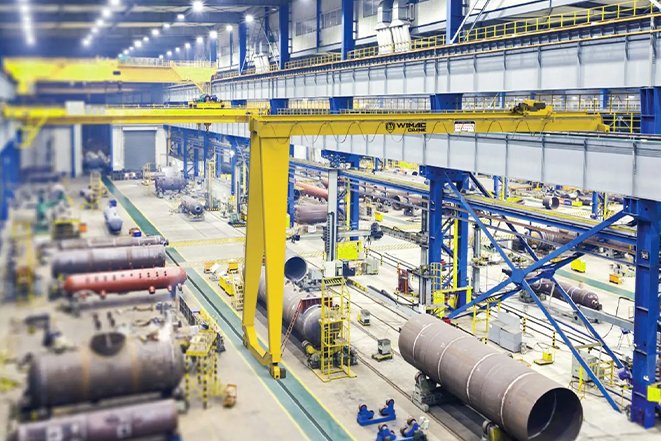
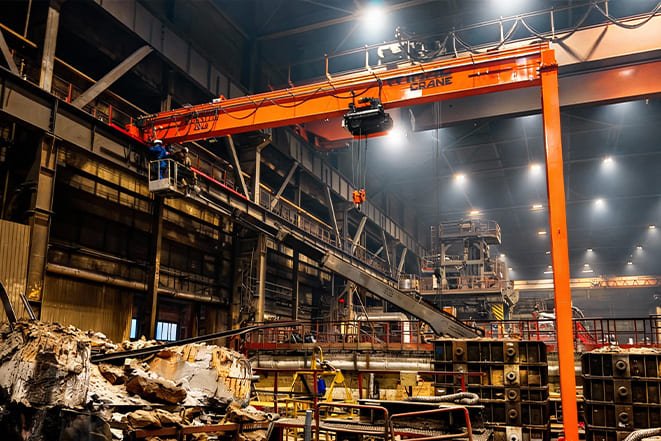
Wimac semi-gantry cranes are designed and manufactured in compliance with FEM and ISO standards. They offer low maintenance costs, high operational efficiency, and long service life.

VFD Controlled

Smooth acceleration and precise positioning with variable frequency drives on all motions.

FEM & ISO Compliant

Designed and manufactured according to international crane safety standards.

Semi-Gantry Crane FAQ

Common questions about Wimac semi-gantry cranes — structure, capacity, span and where they make sense.


What is a semi-gantry crane?
A semi-gantry crane is a hybrid portal crane: one leg runs on a ground rail, while the opposite end of the bridge runs on a wall-mounted (elevated) runway beam. The configuration combines the floor-space efficiency of a wall crane with the span and capacity of a true gantry.
How does a semi-gantry differ from a full gantry?
A full gantry crane has two free-standing legs and two ground rails. A semi-gantry replaces one of those ground rails with an elevated wall-mounted track, so you only need a single floor runway. This frees floor space on one side, reduces civil works and is ideal for retrofits.
When is a semi-gantry the best choice?
Semi-gantry is the right choice when the layout has a wall or column line that can carry an elevated runway, when one side must stay clear for traffic, and when the structure cannot support a full overhead crane runway. Common in production halls, warehouse zones and machine-shop bays.
What is the maximum capacity of a semi-gantry crane?
Wimac semi-gantry cranes are engineered from 1.6 t up to 250 t. The realistic upper limit on a specific project depends on the load-bearing capacity of the host building's wall / column structure that supports the elevated runway.
Can a semi-gantry be installed in an existing building?
Yes — semi-gantries are a popular retrofit option because they only require one new ground runway plus wall-mounted runway brackets, rather than a full pair of columns. Wimac engineering verifies the wall / column structural capacity for the elevated runway loads before manufacture.
What FEM / ISO duty class and span ranges are available?
Wimac semi-gantry cranes are typically designed in the FEM 1Am to 4m / ISO M4 to M8 duty class range, with spans up to 30 m. Full FEM / ISO criteria are in our general information & selection guide.